
Inspection Services in Pakistan
Inspection services in Pakistan for buyers who cannot be at the factory. We run in-line and pre-shipment inspections to AQL or your own spec, and you receive a written report to approve or reject the order.
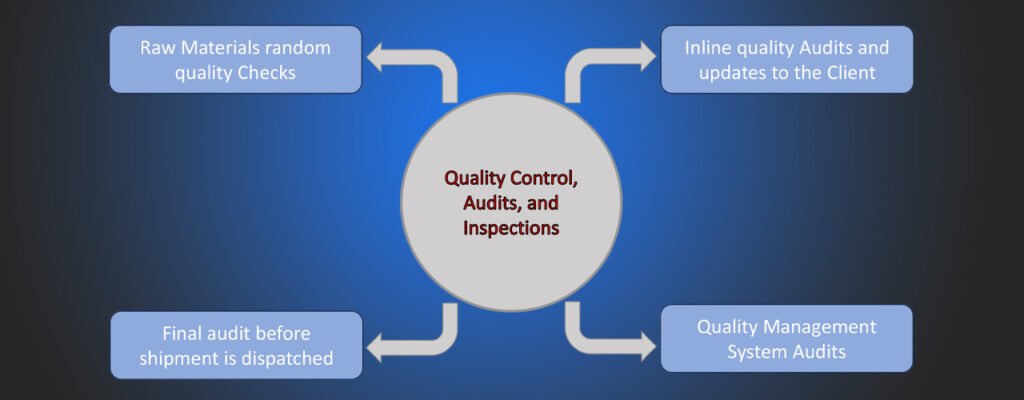
How Our Inspection Services in Pakistan Protect Your Order
ProQ Sourcing is a sourcing and inspection agent based in Sialkot. We are not the factory, and we do not make the goods we inspect. Instead, we act as third-party QC for you: we check the goods against your approved sample and spec, and we report what we find.
Without an inspection, the first time you see bulk goods is when they arrive. By then, however, the factory has your money, and fixing defects means returns, delays and lost sales. An inspection moves that moment back into the factory, while problems can still be fixed.
Our team has hands-on experience in production and quality management in Sialkot’s export industry. As a result, we know where defects usually hide and how factories try to hide them.
What Our Inspections Cover
We offer two main inspection types, plus checks that support them. Most buyers use both main types on each order.
In-line inspection
An in-line inspection takes place once production is underway, often when the first part of the order is finished. It catches repeated defects early, so the factory can correct them.
Pre-shipment inspection
A pre-shipment inspection takes place when the goods are finished and mostly packed. It is your last chance to approve or reject before payment and shipment.
Measurement checks
We measure samples from the lot against your size chart and tolerance, size by size.
Function tests
We test what the product must do: zips, closures, stretch, bounce, grip or seam strength.
Packing and labelling
We check labels, barcodes, carton marks, quantities and packing method against your instructions.
Photo evidence
Every finding is photographed, so you can see the issue yourself, not just read about it.
How an AQL Inspection Works
An AQL inspection checks a random sample instead of every piece. The steps below show how we run it.
1. Agree the standard
You confirm the AQL limits, inspection level and checklist before the visit.
2. Draw the sample
We pick cartons and pieces at random, using the sample size for your lot.
3. Inspect
We check workmanship, measurements, function and packing, and we count defects by class.
4. Report
We send a written report soon after the visit, with a pass or fail recommendation.
What the Inspection Report Contains
Every inspection report follows the same structure, so you can compare orders and factories over time.
- Order details, quantities checked and the sample size used
- Defects found, grouped as critical, major or minor, with counts
- Photos of each defect type and of the packed goods
- Measurement tables against your size chart
- Function test and packing results
- A pass, fail or hold recommendation
The recommendation is ours; the decision is yours. You can accept, ask for rework and a re-inspection, or reject the lot.
AQL Sampling and Defect Classes Explained
AQL stands for Acceptance Quality Limit. It comes from ISO 2859-1, and it sets how many defects a random sample may contain before a lot fails. This ISO 2859-1 standard page describes the sampling schemes.
Inspection level sets the sample size: General Level II is the usual choice, while Levels I and III take smaller or larger samples. Defects are then sorted into three classes. Common defaults are 0 for critical, 2.5 for major and 4.0 for minor defects, but these are buyer choices, not fixed rules.
Critical defects
- Anything unsafe for the user
- Sharp edges, needles or loose small parts
- Missing safety markings
- Wrong or misleading labels
Major defects
- Defects likely to cause a return
- Open seams and broken stitches
- Measurements out of tolerance
- Wrong colour or material
Minor defects
- Small issues that do not affect use
- Loose threads
- Small marks or uneven finish
- Slight print misalignment
Common Defects Our Inspections Catch
Defects tend to repeat in the same ways across products. These are the patterns we look for first.
Repeated workmanship faults
One operator with a wrong machine setting can produce hundreds of faulty pieces. An in-line inspection spots the pattern early, so the factory corrects the line before the whole order is affected.
Measurement drift across sizes
Grading errors often appear only in the largest or smallest sizes. Therefore we measure across the size range, not just the sample size, so drift does not reach your customers.
Packing and labelling errors
Wrong barcodes, mixed sizes in cartons or missing care labels can block goods at a warehouse. We check packing against your instructions before the cartons are sealed.
Materials changed after approval
Lighter fabric or cheaper trims sometimes replace the approved ones in bulk. So we compare bulk materials with your approved sample and report any change.
Who Inspections Suit
New buyers
If you are new to a factory, an inspection shows whether bulk quality matches the sample before you pay the balance.
Small orders
Even small orders carry real risk. A short inspection costs far less than a shipment of returns.
Repeat orders
Regular inspections keep a factory consistent and give you records to compare over time.
Inspection Points by Product Type
Every product has its own weak points, so our checklist changes with the category. Below are typical examples of what we add for each.
Apparel
Fabric weight, colour fastness, seams at stress points, print durability and measurements across the size range.
Leather goods
Leather grade and thickness, colour match between panels, stitch tension, edge finishing and hardware function.
Gloves
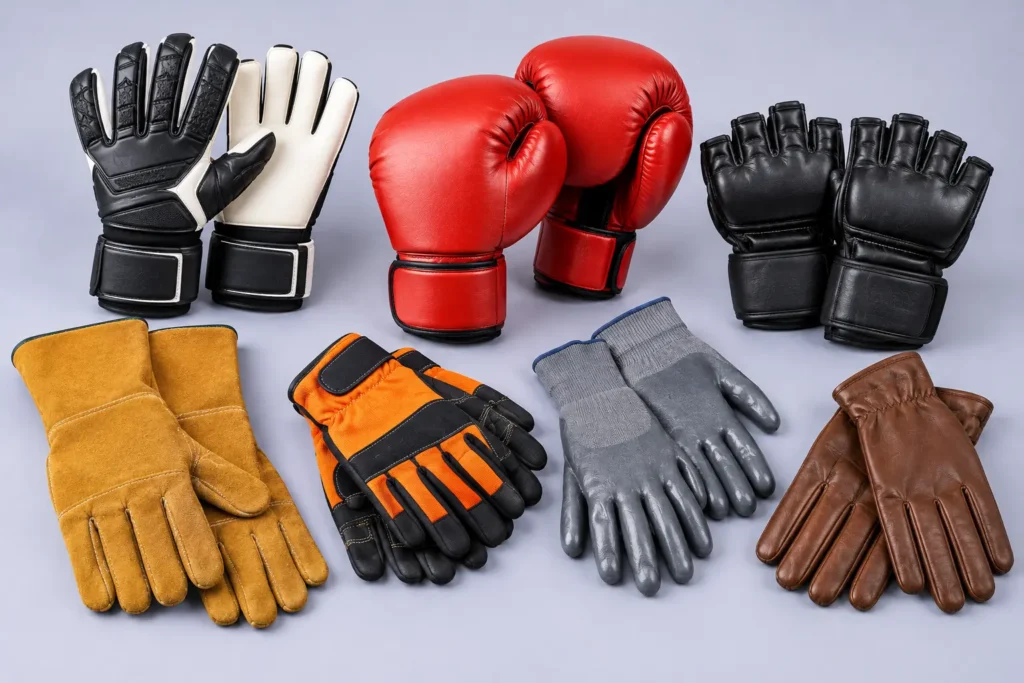
Fit and sizing, palm material, coating coverage, closure strength and left/right pairing.
Balls and equipment
Size, weight, roundness, rebound and air retention for balls; finish, balance and cracks for bats and sticks.
Fees for Inspections
Our fee is quoted per project and agreed in writing before work starts. It depends on the product, the order size, the inspection type and the number of visits.
Inspection findings are always delivered as a written report. So you can share it with your team, your factory or your customer.
Products We Inspect

Questions About Inspections
Planning an inspection
When should the final inspection happen?
Book it when production is finished and most goods are packed, usually around eighty percent packed. Then the sample represents the real lot, and there is still time to fix problems before the shipping date.
Which AQL levels should I use?
Many buyers use General Level II with limits of 0, 2.5 and 4.0 for critical, major and minor defects. However, the right choice depends on your product and market. We can explain the trade-offs, and you set the levels.
Can you inspect against my own checklist?
Yes. If you have a checklist or a quality manual, we use it alongside AQL sampling. If you do not, we build one from your approved sample and spec, and you confirm it before the visit.
Results and decisions
What happens if the order fails?
We report the defects with photos and counts. You then decide: the factory can sort and rework the goods for a re-inspection, or you can negotiate or reject the lot. We do not make that decision for you.
Who pays for a re-inspection?
That depends on your agreement with the factory. Many buyers agree in their purchase order that the factory pays for re-inspection after a failure. We can help you include that term before production starts.
How quickly do I get the report?
Soon after the visit; we agree the exact timing in the quote. The report includes photos, defect counts and measurements. So you can make a decision quickly, without waiting for the goods to arrive.
Book an Inspection
Send us your order details, product and shipping date. We then reply with next steps and a written quote for inspection services in Pakistan.
Related: Supplier verification · Production follow-up · Factory audits · How it works · Contact us